
Opening hours and entry
The monastery is open every day, from about 6:00 to 17:00 between May and September and from about 5:00 to 16:00 between October and April. Times can shift around services and feast days. Entry is free. Many visitors leave a donation or light a candle.
What to wear
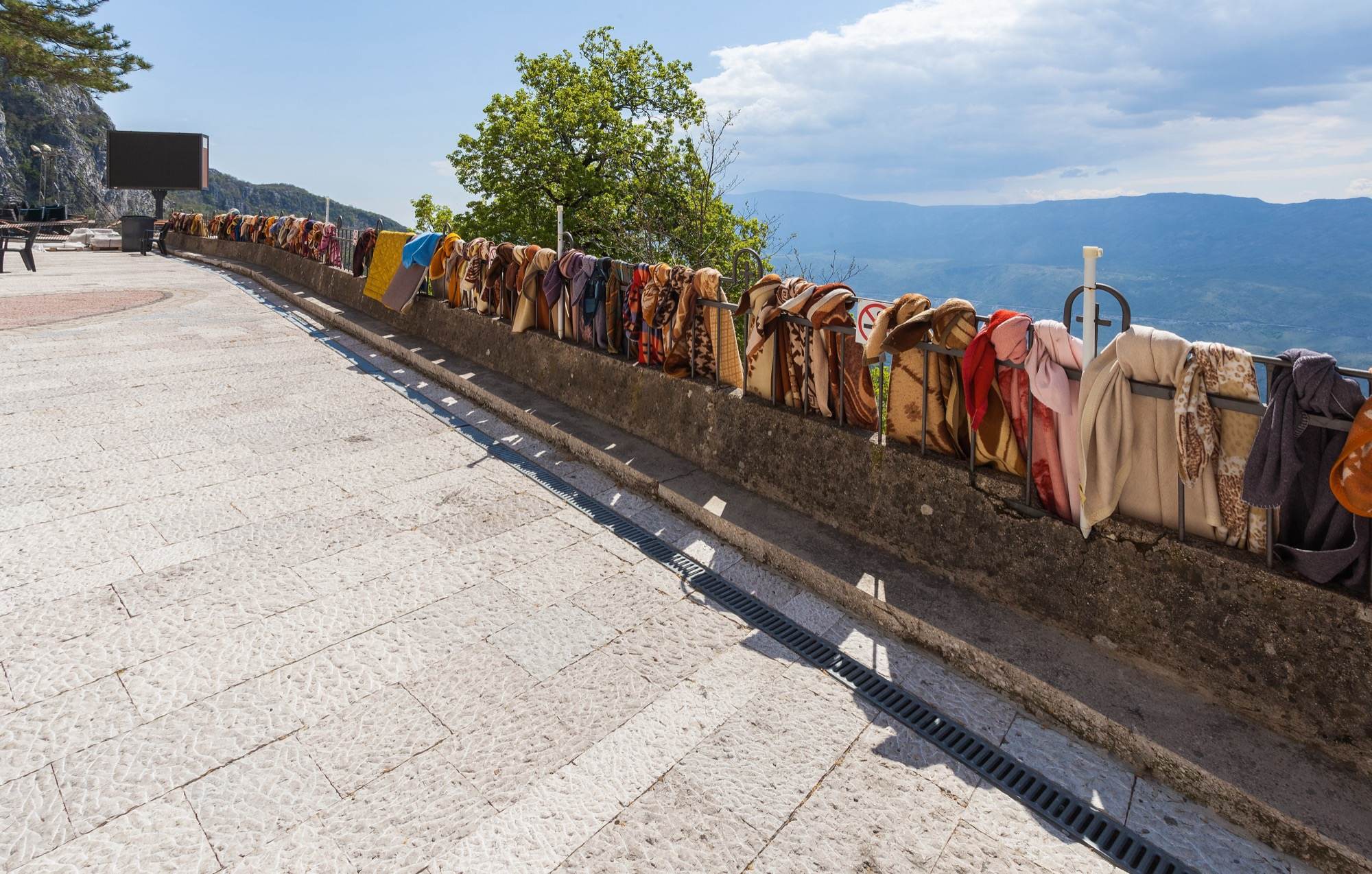
Ostrog is a working Orthodox monastery, so everyone covers their shoulders and knees: long trousers or a long skirt, and a top with sleeves. Women may also cover their hair, though it isn't required. If you arrive in summer clothes, wraps and scarves are usually available near the entrance to the Upper Monastery, and you can buy them at the stalls by the Lower Monastery.

The Upper Monastery and the relics of St Basil
The Upper Monastery is the heart of Ostrog because this is where St Basil lived, died and still rests. Born in 1610 in Mrkonjići, in Herzegovina, Basil (Vasilije) served as the Orthodox bishop of Zahumlje before withdrawing to this cliff, where he founded the monastery in the 17th century. He died here on 29 April 1671. His tomb soon drew pilgrims of every faith, Orthodox, Catholic and Muslim alike, drawn by reports of healing miracles. Today around a million people a year make the journey.
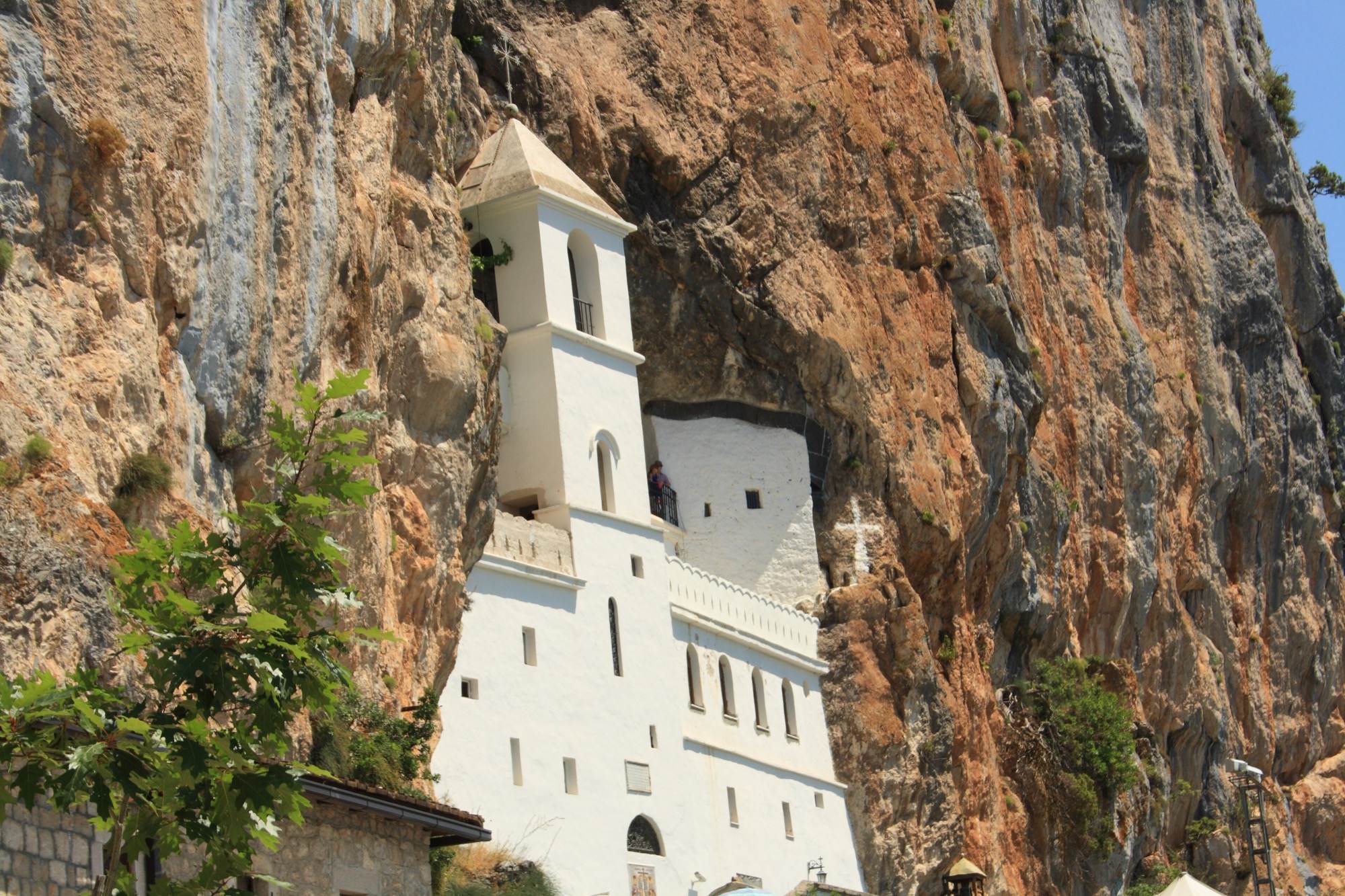
Built into a cave high in the cliff, the monastery's white walls seem to grow out of the rock. Inside are two tiny cave churches. The Church of the Presentation holds the reliquary of St Basil, with frescoes from the end of the 17th century. In the Church of the Holy Cross, the master painter Radul laid his frescoes directly onto the bare rock. Pilgrims queue quietly to venerate the relics, and by the saint's old cell an ancient vine grows straight out of the stone.
A fire in 1923 destroyed most of the monastery buildings but spared the cave churches. The monastery you see today was rebuilt between 1923 and 1926.
Photography isn't allowed inside the cave churches. Outside, the terraces have wide views over the valley.
The Lower Monastery
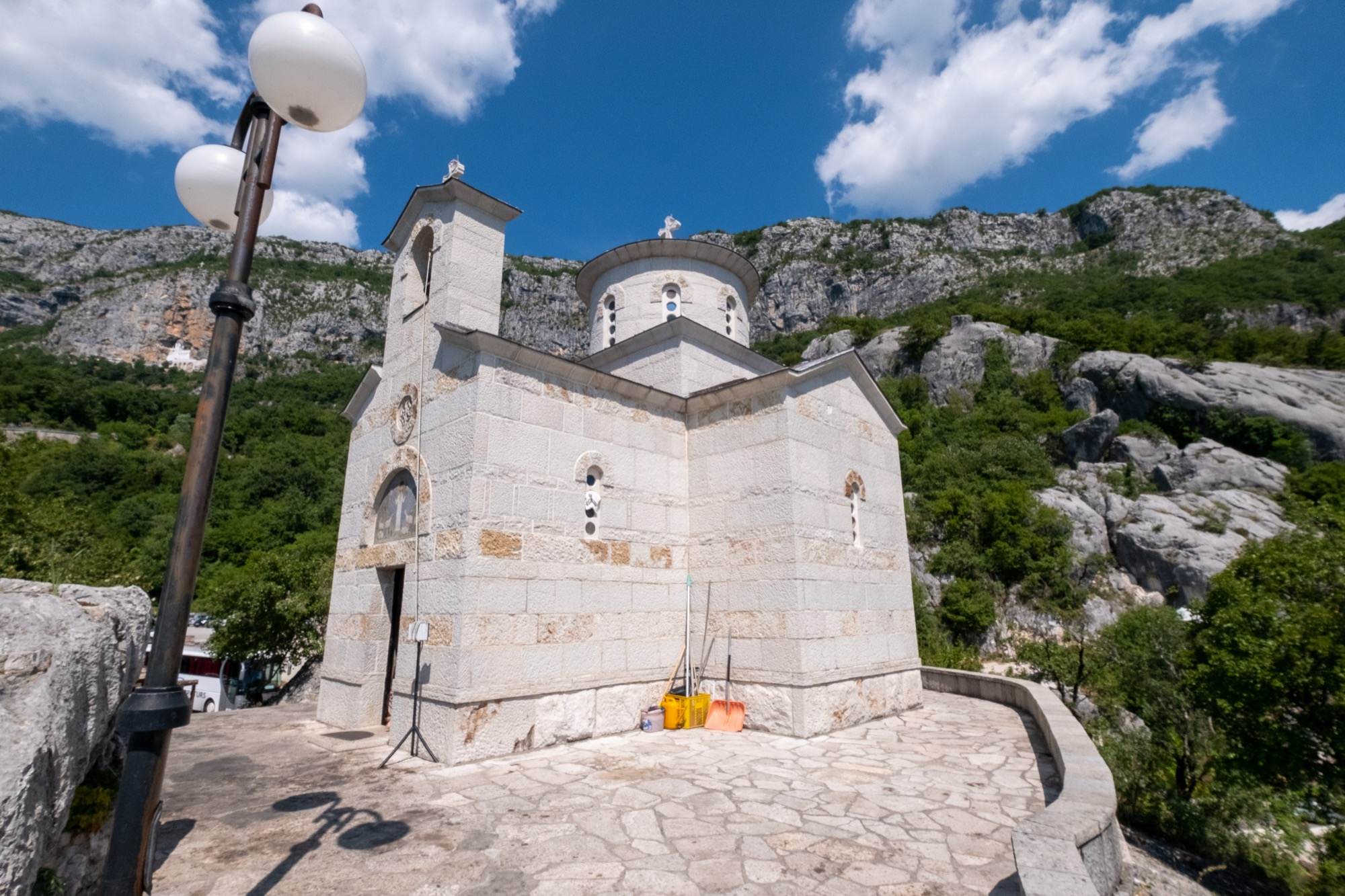
Below the cliff, on a wide, level terrace, the Lower Monastery is built around the Church of the Holy Trinity, raised in 1824 under the abbot Archimandrite Josif Pavićević. Around it are the monks' quarters and the guest house, where pilgrims can stay the night.
On the plateau above stands the Church of St Stanko, built in 2004 to hold the hands of St Stanko. He was a young shepherd killed by the Ottomans in 1712 because he refused to reveal where the relics of St Basil were hidden.
The Lower Monastery has the main car park, so this is where most visitors leave the car and start the climb to the Upper Monastery, on foot or by shuttle.

From the Lower to the Upper Monastery
The two are about 3 km apart, and walking between them is a pilgrim tradition. Some pilgrims even make the climb barefoot. The route follows the narrow mountain road as it winds up the slope in a series of hairpin bends. It's tarmac all the way, with a steady climb and views that open out over the valley as you rise. Allow around half an hour.
Wear comfortable shoes and, in summer, bring water. Keep to the edge of the road, as cars and shuttle vans use it too. Near the top, the road ends at the upper car park, a short, steep walk from the Upper Monastery.
Prefer not to walk? In season, shuttle vans run between the lower and upper car parks for a small fee, or you can drive up to the upper car park, about ten minutes from the Lower Monastery.
When to go
Mornings are the most peaceful time, with soft light on the cliff. The feast of St Basil on 12 May brings huge numbers of pilgrims, an unforgettable time to see Ostrog at its most devout.
Common questions
Do I have to cover my hair?
It isn't required, but many women do as a sign of respect. Covering shoulders and knees is expected of everyone.
Can I take photos?
Yes, outside on the terraces and around the monastery. Inside the cave churches, photography isn't allowed.
Where do I park?
The main car park is at the Lower Monastery. There's also an upper car park at the end of the road, a short, steep walk below the Upper Monastery. In season, shuttle vans link the two.
Can I stay overnight?
Pilgrims can stay in simple dormitory rooms at the Lower Monastery.